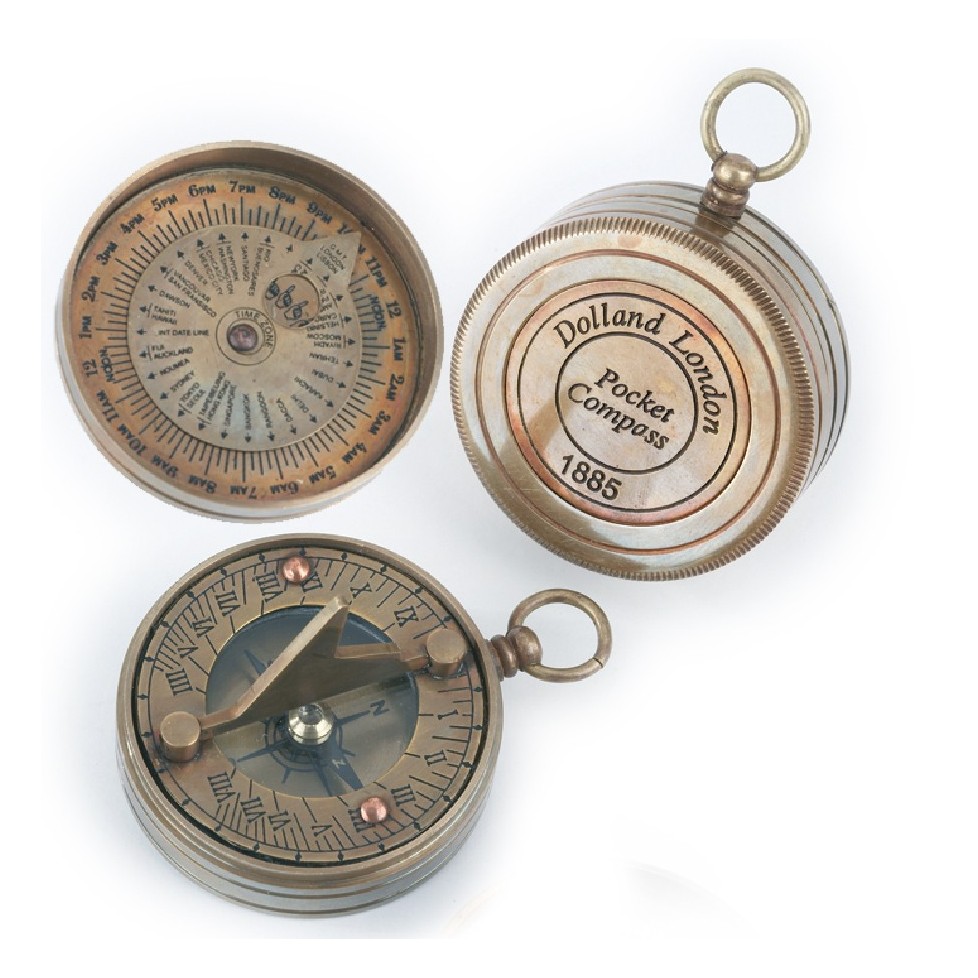
Reproduction of a compass-sundial in aged brass of the type that Christopher Columbus would have used.
Reproduction of a compass-solar clock in aged brass of the type that Christopher Columbus would have used.
The compass opened the world of exploration and discoveries. In the 13th century before JC, the Chinese already used the principle of the magnetic needle. Used for the first time by feng shui priests to indicate where and how to build. The Chinese sailors adapt it to navigation, towards the year 1000, in order to keep the course. The Arabs perfect it by mounting it on an axis. It arrives in Europe between the 10th and 11th centuries, allowing navigators to cross the oceans and explorers to discover the continents. The first instrument that resembles the one that currently exists is due to the Portuguese Ferrande (1483).
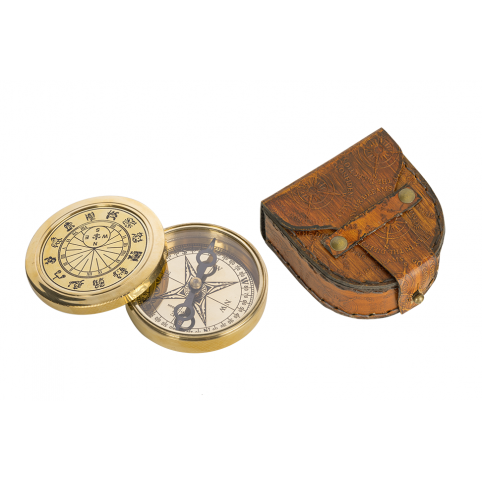
The compass opened the world of exploration and discoveries. The first compass consisted of a container filled with water in which a magnetic needle floated suspended from a thread or threaded through a reed. The Arabs perfect it by mounting it on an axis. It arrives in Europe between the 10th and 11th centuries, allowing navigators to cross the oceans...
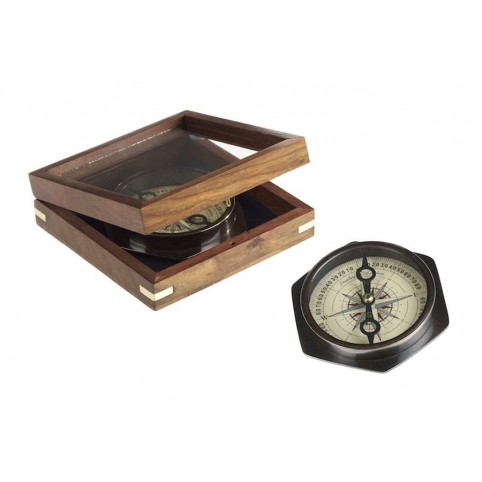
Antiqued brass compass with a box of rosewood and glass.
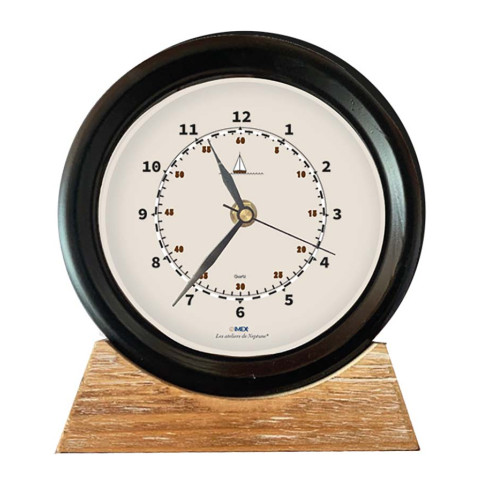
Elegant and original, this quartz marine clock features a round black metal case set on a wooden stand, creating a warm and contemporary contrast. Its clear dial, inspired by traditional navigation instruments, ensures accurate and easy reading with black numerals and a detailed minute scale. Both functional and decorative, it is ideal for a...
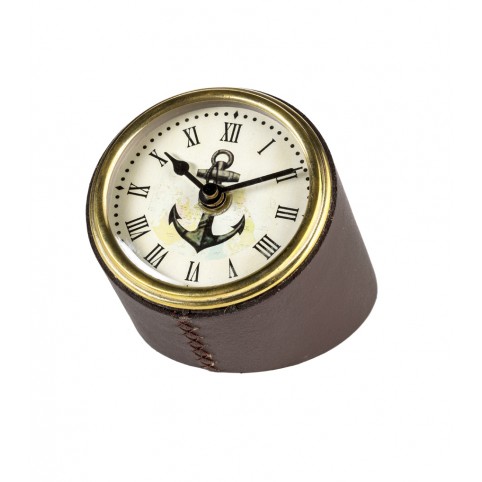
Clock made of varnished brass on a wooden base. Very nautical with the anchor that decorates the dial of this precious watch. Give your office a nautical touch!
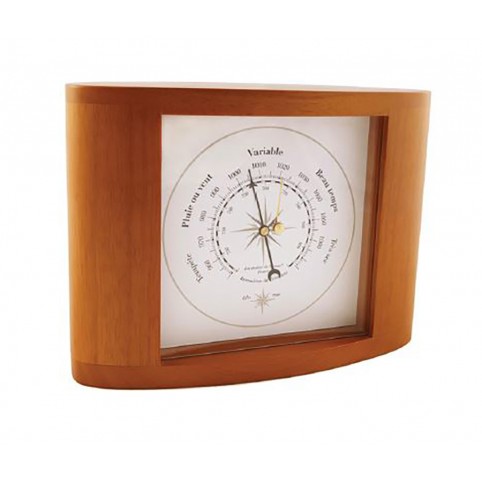
This precision IMEX MARINE barometer is presented in an elegant wooden frame with carefully finished details. Its clear and refined dial makes it easy to monitor changes in atmospheric pressure and the main weather trends. Made from good-quality materials, it combines reliability, easy readability and elegance. Both practical and decorative, it is ideal...
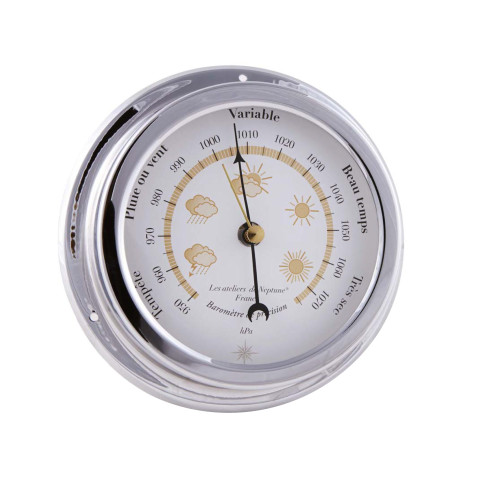
IMEX Marine barometer, a great benchmark in quality measurement devices. This elegant IMEX Marine barometer analyses pressure variations allowing it to predict the weather. Made with brass plated metal. Made in Spain. Guaranteed 1 year. 14.5x4x14.5 cm.