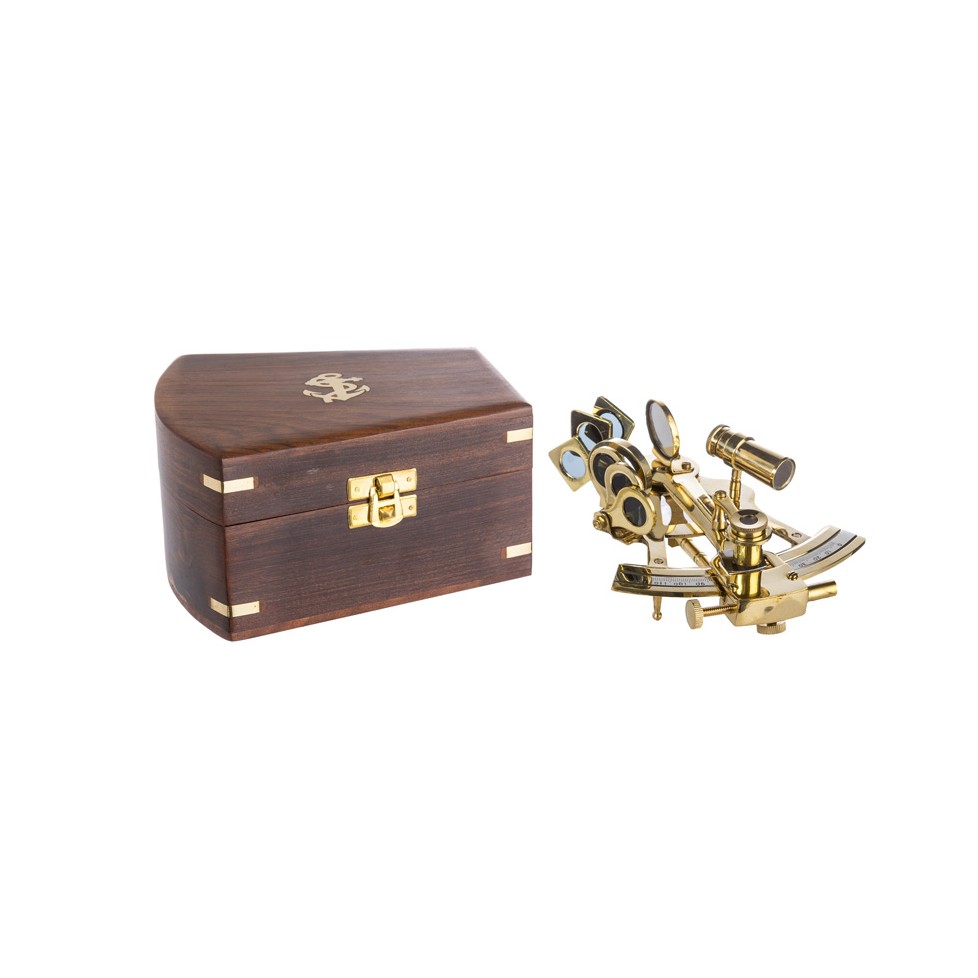

Brass sextant with a sheesham wood box elegantly decorated with brass inlays.
The sextant was designed for sea navigation. It allows you to calculate the angular height of the sun over the horizon. It was invented in the 1730s by two people: John Hadley (1682-1744), English mathematician, and Thomas Godfrey (1704-1749), an American inventor. He quickly replaced the astrolabe and octant as the main instrument for navigation. The sextant consists of a small telescope, to look at the horizon, two mirrors (which reflect the image of the object), filters (for the sun), a movable arm and a graduated circle arc. The opening angle is 60º, one sixth of a circle, hence the name of the instrument.
Brass sextant with a sheesham wood box elegantly decorated with brass inlays.
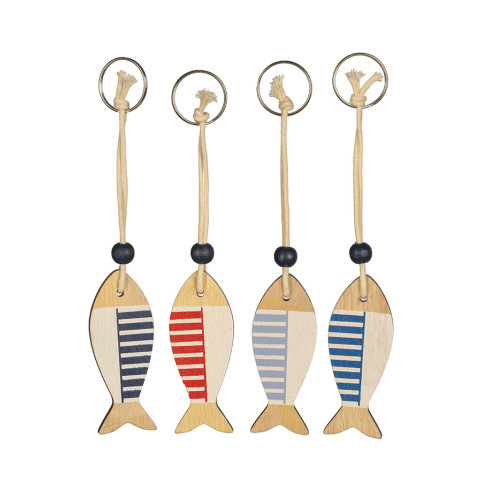
Beautiful collection of 4 keyrings made of wood and rope. These 8 fish-shaped keyrings are made of wood and hand-painted. Original souvenir of your holiday at the seaside and an idea to give as a gift! The price corresponds to a set of 4 keyrings of different colours.
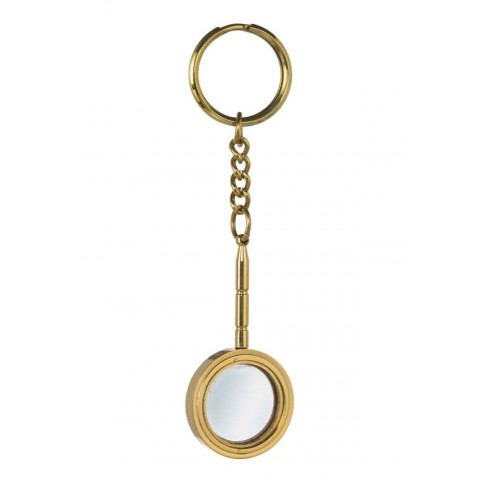
Nautical keychain pocket magnifier. Made of brass and mounted with a hoop.
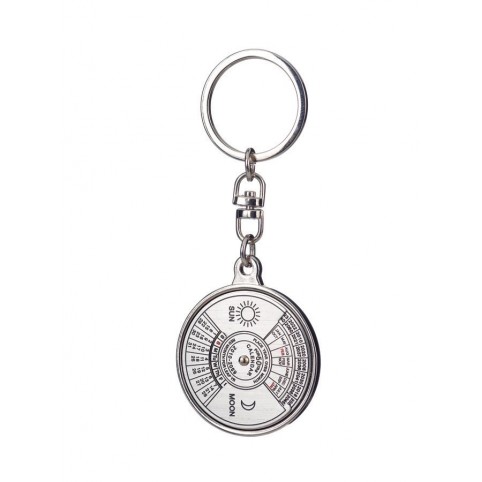
Nautical keychain perpetual calendar. Made of nickel and mounted with a hoop.
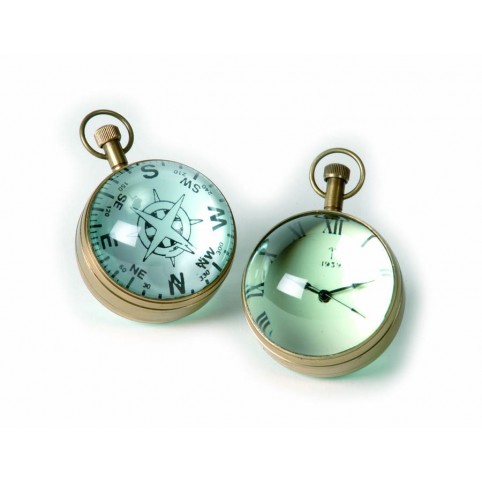
Roman numeral spherical clock with stem winder, decorated with compass rose on the reverse.Brass with glass magnifier. Comes with lovely acacia wood box with brass inlays.
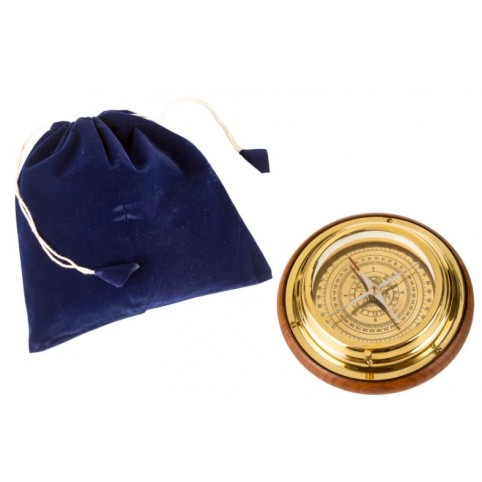
Antique brass compass with dial mounted in an acacia wood base.
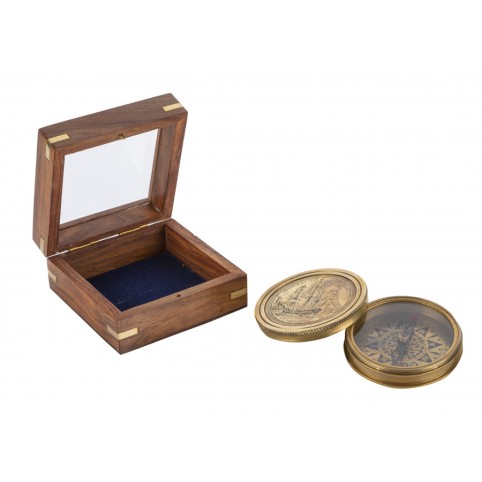
Antiqued brass compass reproduction with a box of acacia wood and small glass window. The compass opened the world of exploration and discoveries. The first compass consisted of a container filled with water in which a magnetic needle floated suspended from a thread or threaded through a reed. The Arabs perfect it by mounting it on an axis. It arrives in...
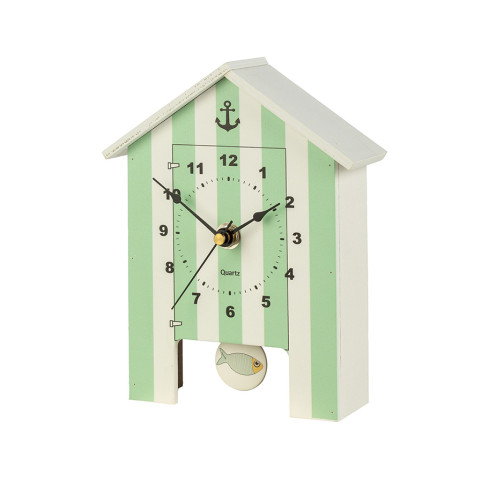
Original pendulum table clock in the shape of a beach hut. Give your home a touch of the coast with this exclusive clock. It is made of wood and handcrafted in Spain. A drawing of a marine fish is printed on the pendulum. This is a gift idea for those in love with the sea and the beach. It works with one AA battery (not included) that can be easily...
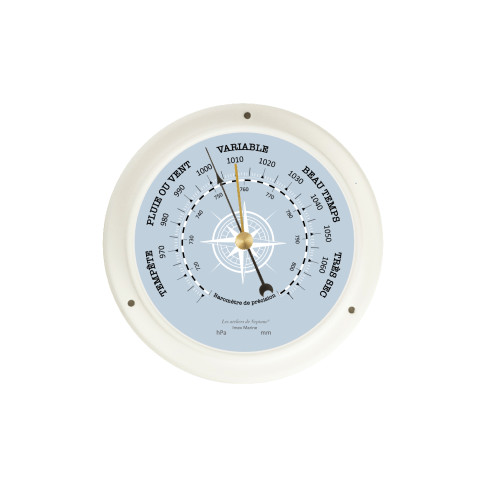
IMEX Marine barometer, a great benchmark in quality measurement devices. This elegant IMEX Marine barometer analyses pressure variations allowing it to predict the weather. Made of metal and painted white. Made in Spain. Guaranteed 1 years. 11.5x3.5x11.5cm.
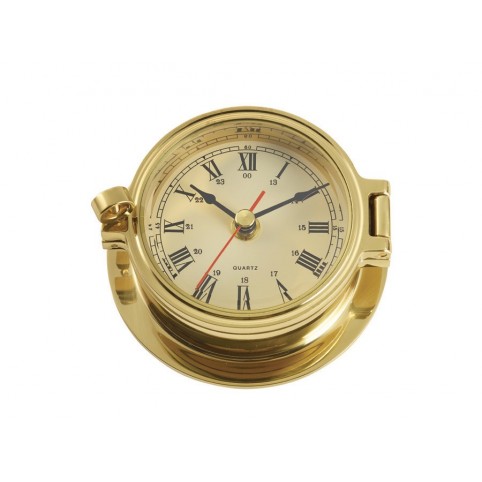
Reloj marino ubicado en un ojo de buey en latón barnizado. Un objeto clásico y elegante.