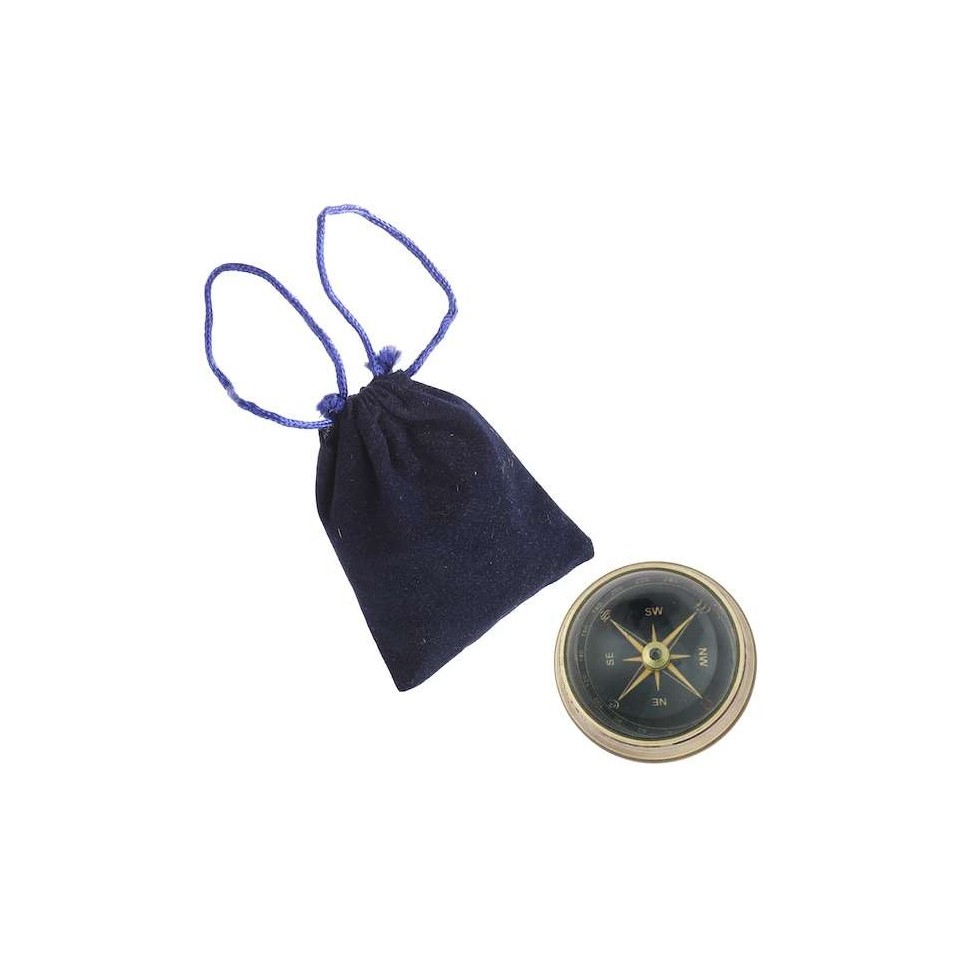
Brass compass with glass magnifier with lovely compass rose. Comes with navy blue velvet bag.
The compass (from the Latin "passus" ("step")) opened up the world to exploration and discovery. The principle of the magnetic needle was already known to the Chinese in the 3rd century BC and was first used by feng shui priests to tell them where and how to build. It was adapted to maritime navigation by Chinese sailors around the year 1000. The first compasses comprised a magnetic needle floating in a bowl of water, with the needle suspended on a thread or threaded through a reed. The Arabs perfected this by mounting the needle on a pivot. The compass arrived in Europe between the 10th and 11th centuries, enabling sailers to cross the oceans and explorers to discover the continents. The first instrument to resemble the modern compass is attributed to Portuguese citizen Ferrande (1483). Brass compass with glass magnifier with lovely compass rose. Comes with navy blue velvet bag.
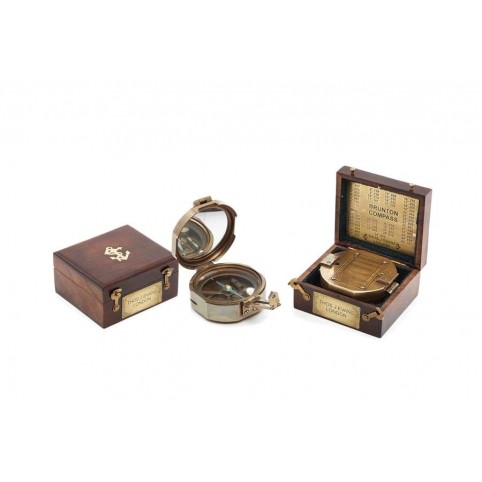
BRUNTON Pocket Transit compass. Working reproduction of the pocket transit compass invented by mining engineer D.W Brunton in 1894.Brass compass presented in lovely sheesham wood box with brass anchor motif inlay. The two rotating bubble levels give the declination angle reading. The needle is automatically blocked when the lid is closed.
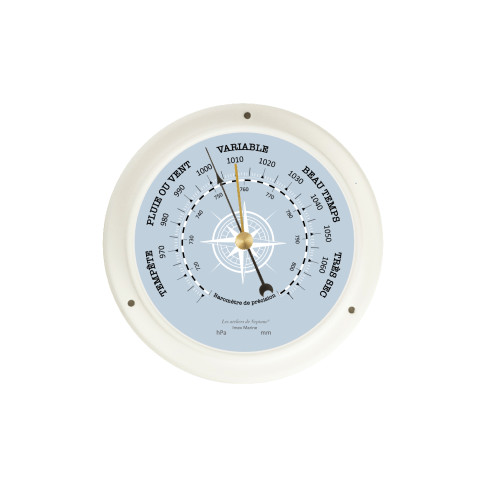
IMEX Marine barometer, a great benchmark in quality measurement devices. This elegant IMEX Marine barometer analyses pressure variations allowing it to predict the weather. Made of metal and painted white. Made in Spain. Guaranteed 1 years. 11.5x3.5x11.5cm.
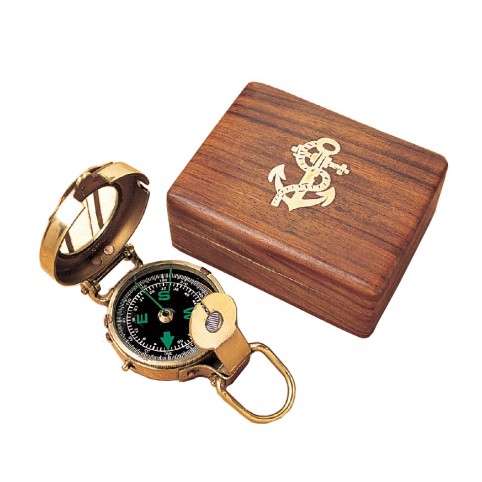
Brass "Engineering" compass and acacia wood box with anchor motif.
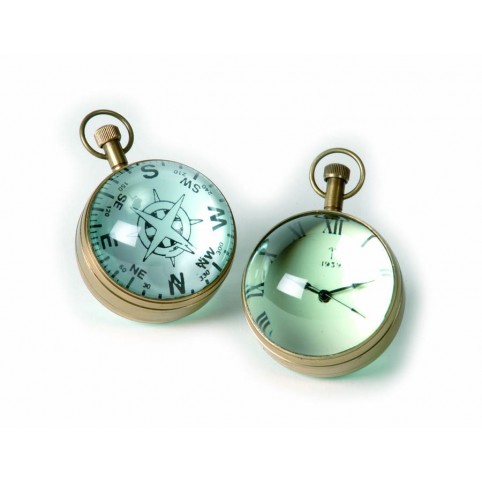
Roman numeral spherical clock with stem winder, decorated with compass rose on the reverse.Brass with glass magnifier. Comes with lovely acacia wood box with brass inlays.
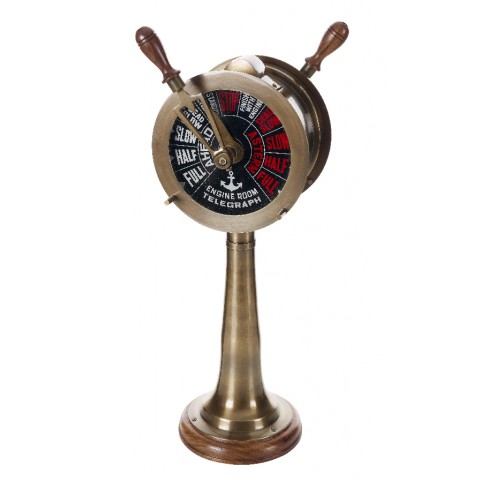
The naval Telegraph enabled crew members to communicate quickly between themselves by means of a rapid succession of signals for each letter of the alphabet and for separating words.Antiqued brass Telegraph. A great gift for lovers of the sea
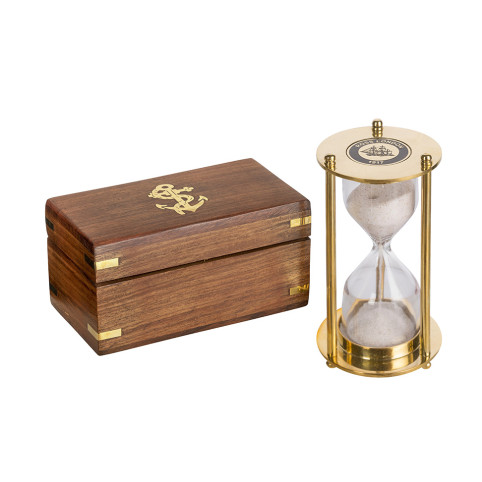
Decorative brass sandglass with an acacia wood box. It runs for about 1 minute. Sizes: 5x9.5x5cm. Box: 12x6.5x6.7cm.