
- On sale!
- -30%
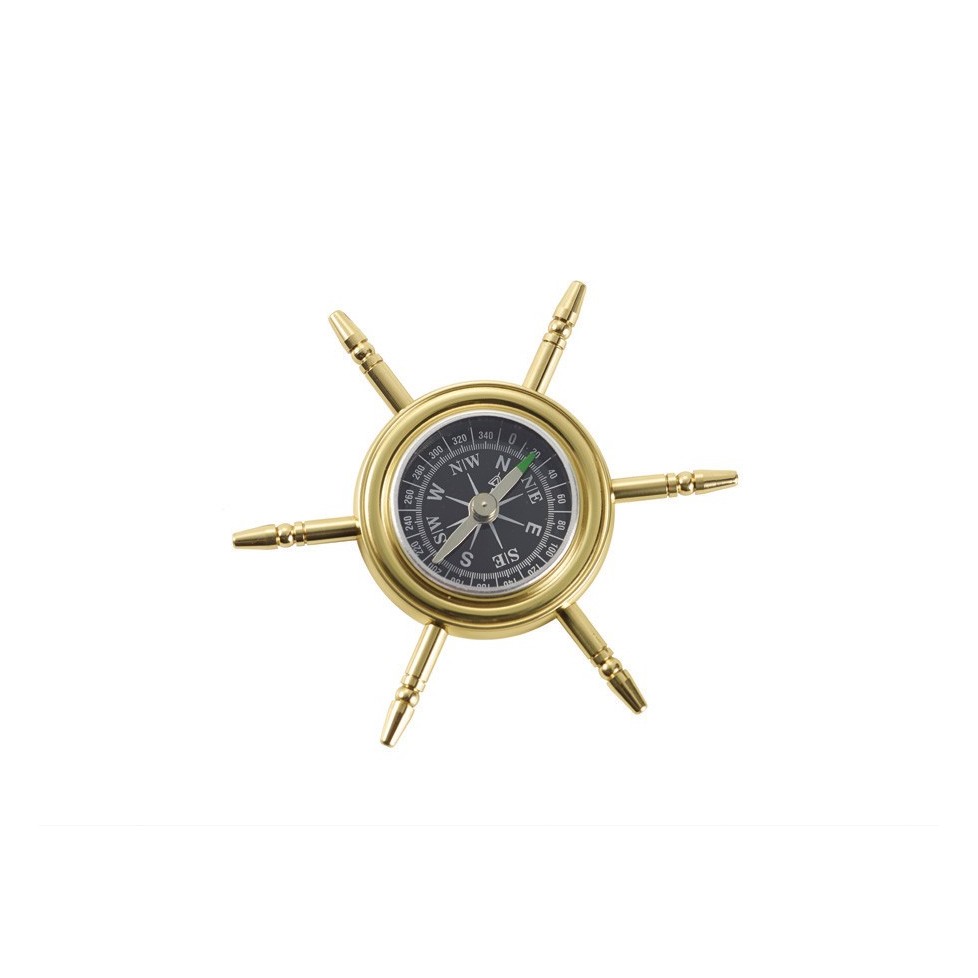
Ship wheel of 6 handles with a compass in the center. Made in varnished bronze.
The compass (from the Latin "passus" ("step")) opened up the world to exploration and discovery. The principle of the magnetic needle was already known to the Chinese in the 3rd century BC and was first used by feng shui priests to tell them where and how to build. It was adapted to maritime navigation by Chinese sailors around the year 1000. The first compasses comprised a magnetic needle floating in a bowl of water, with the needle suspended on a thread or threaded through a reed. The Arabs perfected this by mounting the needle on a pivot. The compass arrived in Europe between the 10th and 11th centuries, enabling sailers to cross the oceans and explorers to discover the continents. The first instrument to resemble the modern compass is attributed to Portuguese citizen Ferrande (1483).
Ship wheel of 6 handles with a compass in the center. Made in varnished bronze.
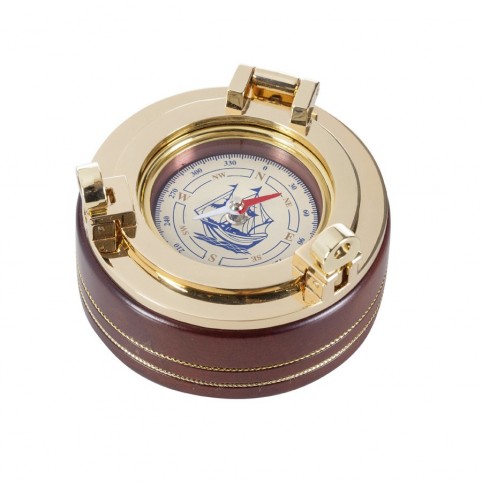
Brass porthole compass with wooden base.
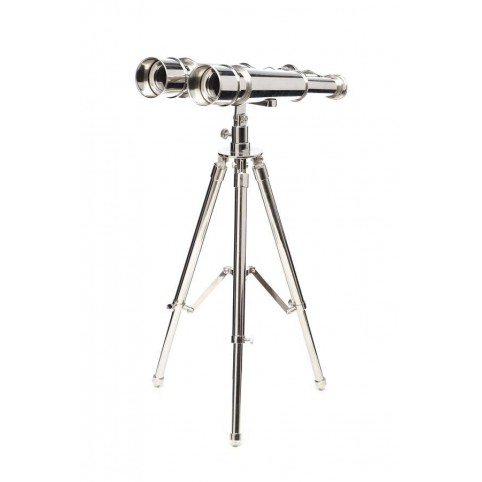
Naval binoculars in nickel, mounted on articulated, adjustable tripod
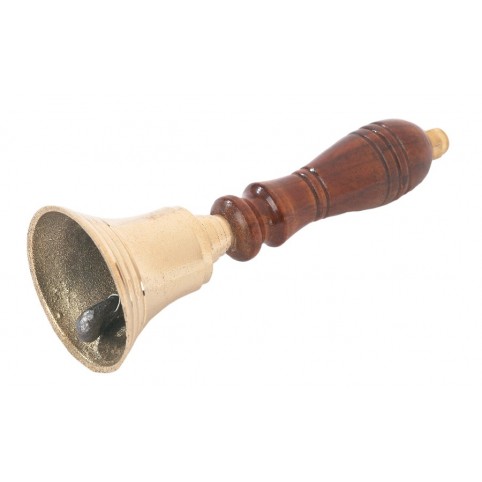
Elegant brass hand bell with acacia wood handle.
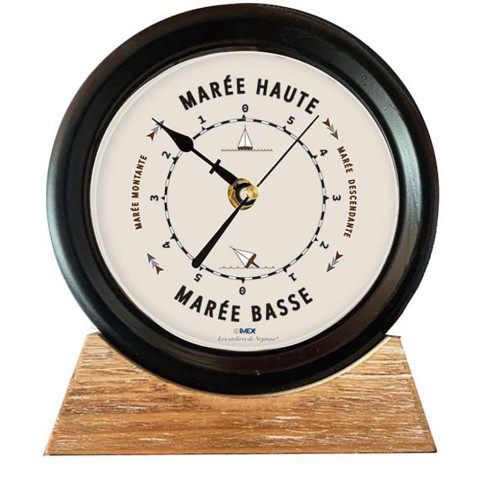
IMEX Marine tide indicator, a great benchmark in quality measurement devices. With a single glance, this elegant tide indicator IMEX Marine offers you the level of the tides throughout the year.
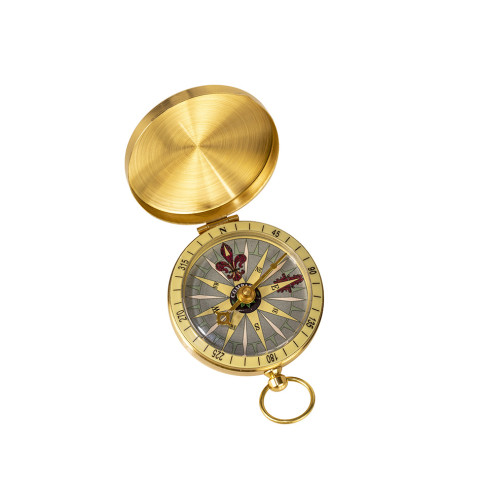
Elegant nautical-inspired compass made of brass. The bottom of the compass is decorated with a printed compass rose. This nautical piece is an original gift idea and this instrument was used to determine directions at open sea.
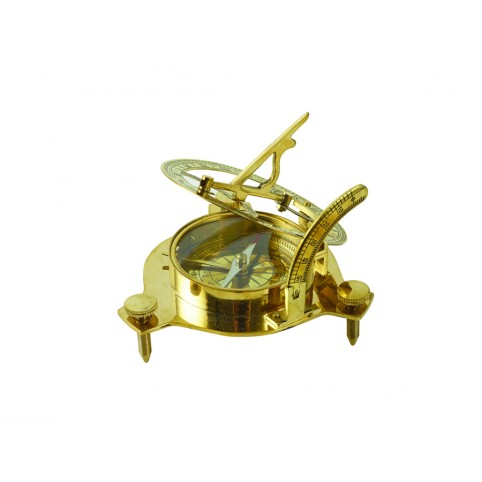
The invention of the portable equinoctial sundial is attributed to Nicolas Rugendas, master watchmaker of German origin in 1620 and author of the oldest dial of the Augsburg type. The first portable equinoctial clocks appeared in southern Germany, during the reign of Charles V, at the beginning of the 16th century. They acquired their popularity only in...