
- -30%
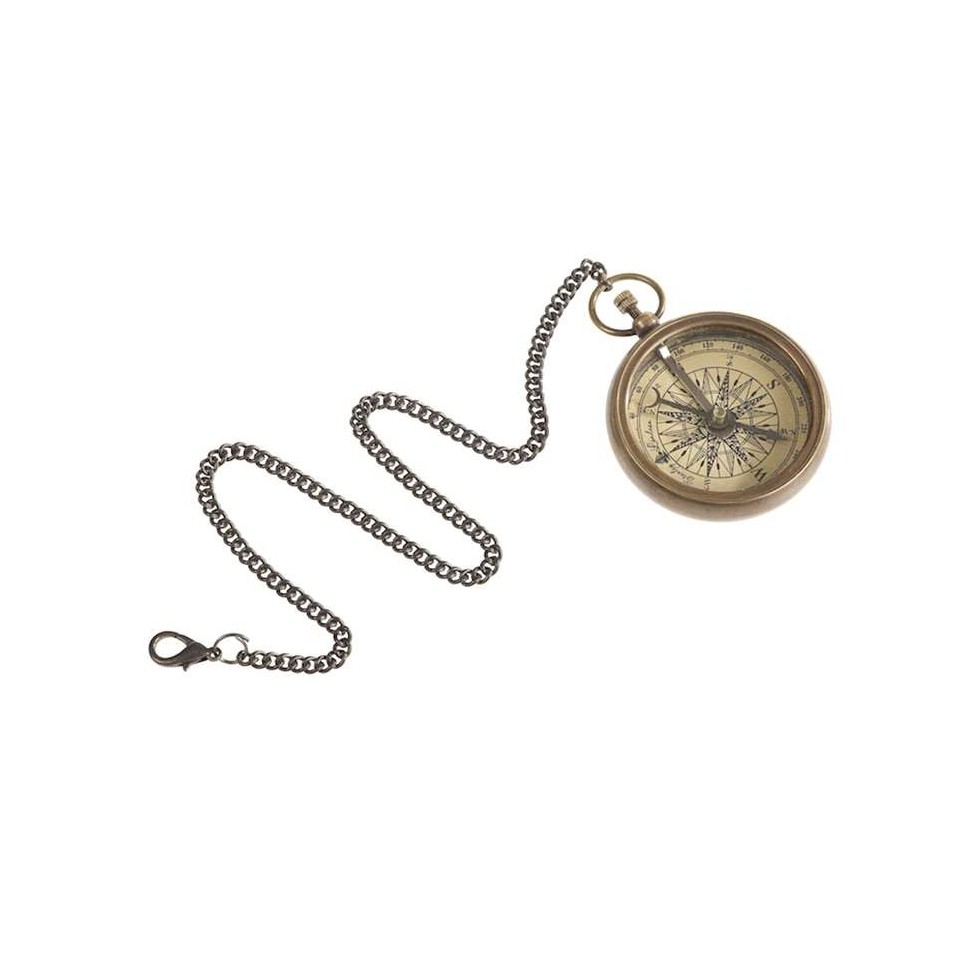
Antiqued brass pocket compass with chain. Comes with velvet bag.
The compass (from the Latin "passus" ("step")) opened up the world to exploration and discovery. The principle of the magnetic needle was already known to the Chinese in the 3rd century BC and was first used by feng shui priests to tell them where and how to build. It was adapted to maritime navigation by Chinese sailors around the year 1000. The first compasses comprised a magnetic needle floating in a bowl of water, with the needle suspended on a thread or threaded through a reed. The Arabs perfected this by mounting the needle on a pivot. The compass arrived in Europe between the 10th and 11th centuries, enabling sailers to cross the oceans and explorers to discover the continents. The first instrument to resemble the modern compass is attributed to Portuguese citizen Ferrande (1483). Antiqued brass pocket compass with chain. Comes with velvet bag.
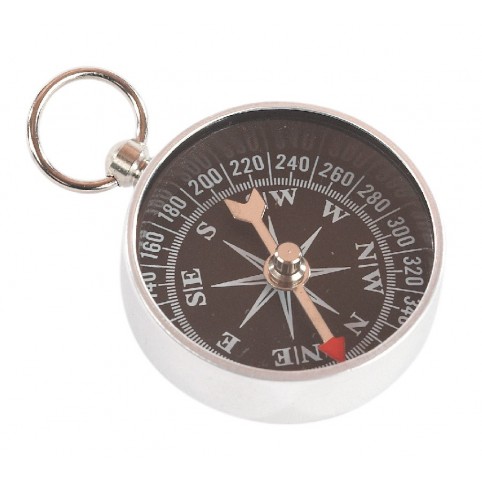
Nickel pocket compass with lovely compass rose.
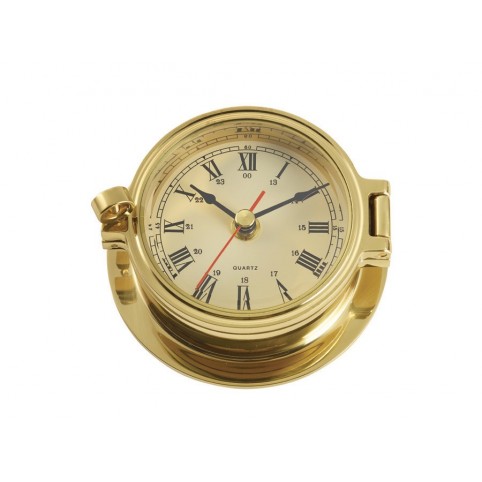
Reloj marino ubicado en un ojo de buey en latón barnizado. Un objeto clásico y elegante.
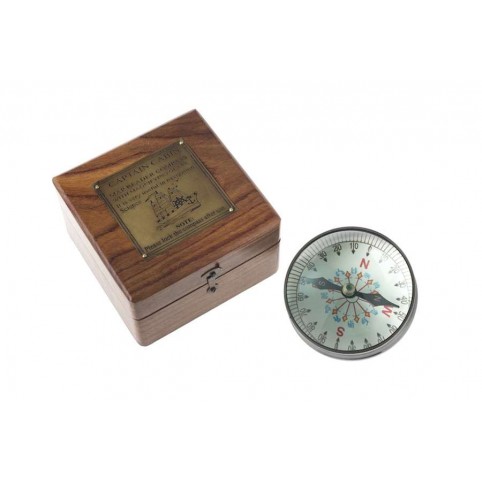
Antiqued brass compass with glass magnifier and rosewood box.
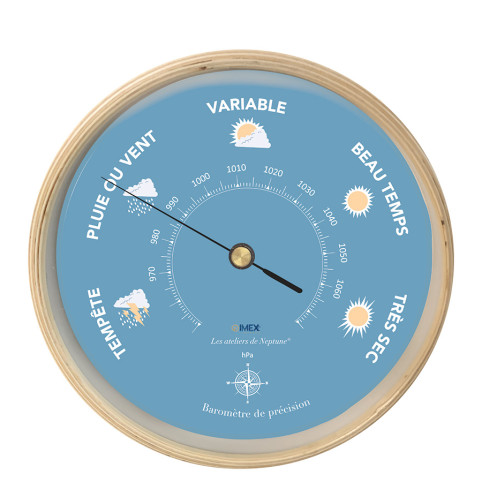
Precision IMEX MARINE barometer with a light wood frame and blue dial, combining a modern and nautical style. The different weather zones — Tempête, Pluie ou Vent, Variable, Beau Temps et Très Sec — are clearly marked and illustrated with weather icons. Both elegant and decorative, it allows you to monitor changes in atmospheric pressure while...
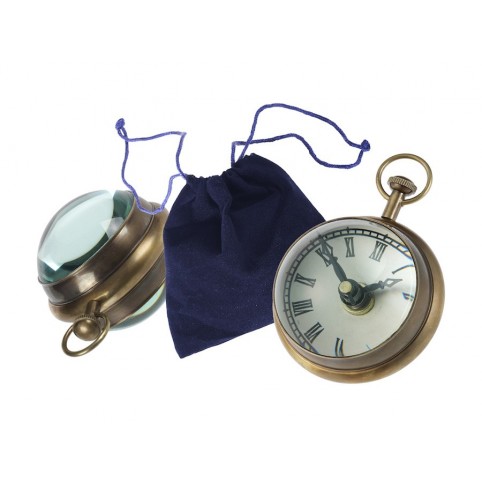
Roman numeral spherical clock with stem winder, decorated with compass rose on the reverse.Brass with glass magnifier. Comes with lovely blue velvet bag.
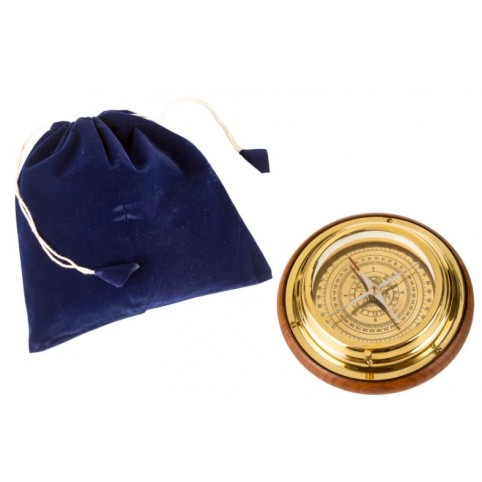
Antique brass compass with dial mounted in an acacia wood base.