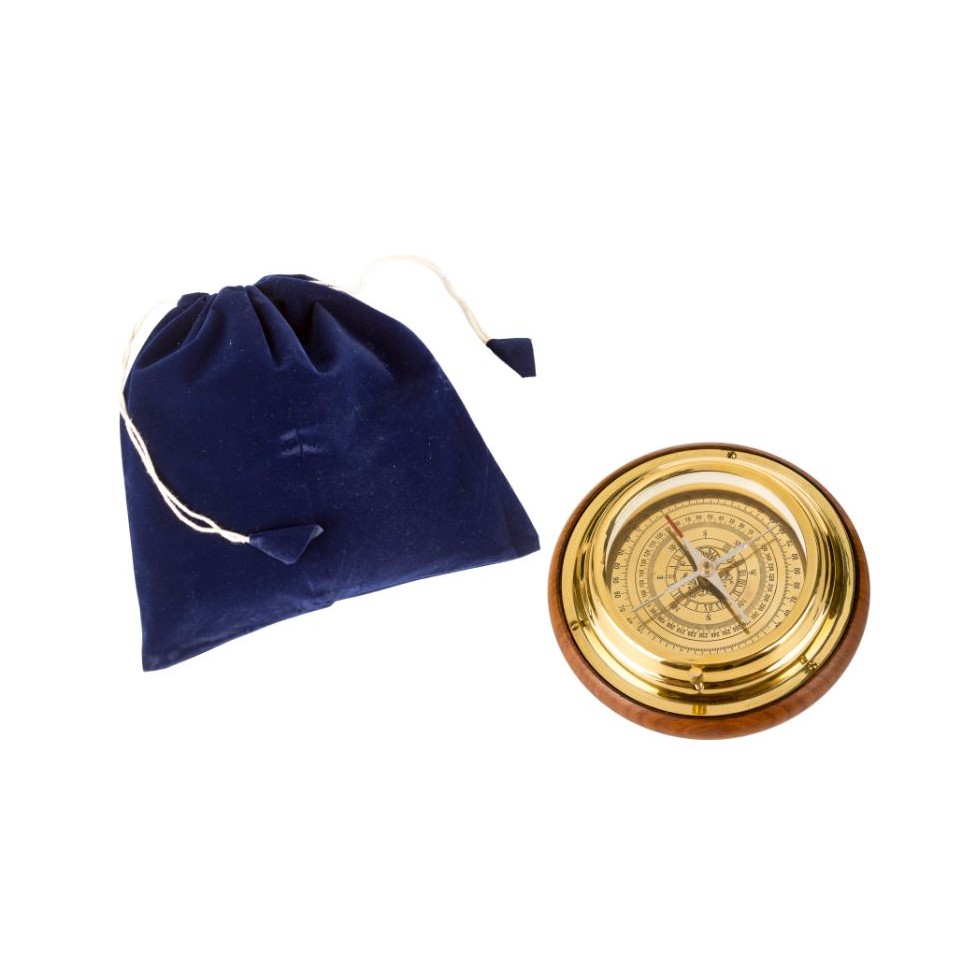
Antique brass compass with dial mounted in an acacia wood base.
The compass (from the Latin "passus" ("step")) opened up the world to exploration and discovery. The principle of the magnetic needle was already known to the Chinese in the 3rd century BC and was first used by feng shui priests to tell them where and how to build. It was adapted to maritime navigation by Chinese sailors around the year 1000. The first compasses comprised a magnetic needle floating in a bowl of water, with the needle suspended on a thread or threaded through a reed. The Arabs perfected this by mounting the needle on a pivot. The compass arrived in Europe between the 10th and 11th centuries, enabling sailers to cross the oceans and explorers to discover the continents. The first instrument to resemble the modern compass is attributed to Portuguese citizen Ferrande (1483).
Antique brass compass with dial mounted in an acacia wood base.
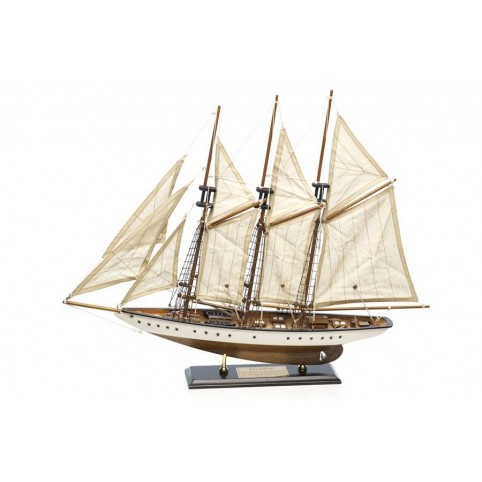
The Atlantic (1903) is a 54 m three-mast schooner designed by William Gardner for New York Yacht Club member Wilson Marsall. She won the emperor William II of Germany transatlantic Kaiser's Cup in 1905 setting a crossing record of 12 days, 4 hours and 1 minute.She ended her days as a Coast Guards training ship from 1941 to 1947, defore being broken...
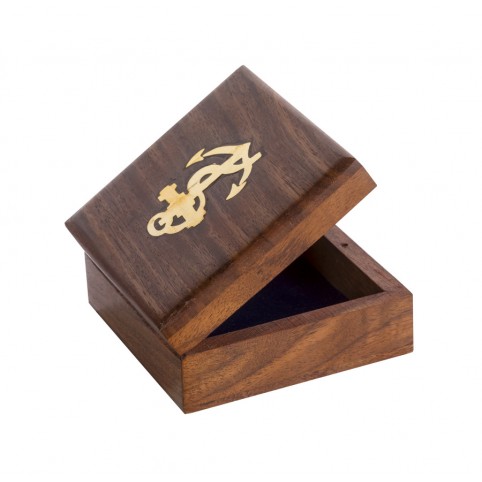
Solid rosewood box, marched with a brass anchor. Ideal as a gift box. This marine style box will give all small objects the prestige they deserve.
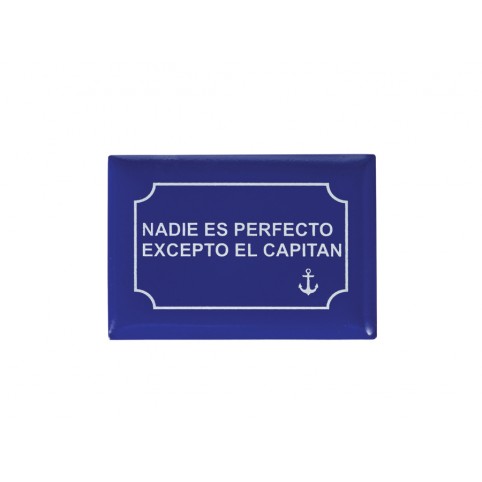
Original marine magnet made of metal and enamelled navy blue.
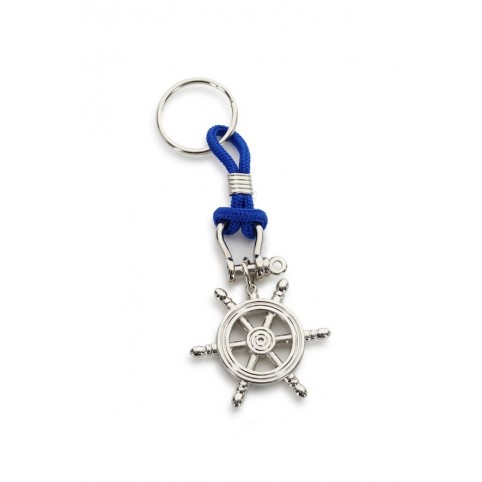
Original key ring of a helm and a carabiner tied with a sailor's knot. Made of nickel and mounted with a hoop.
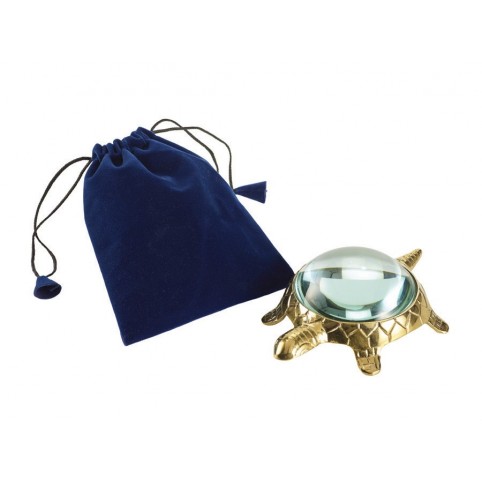
Charming turtle whose shell is a magnifying glass.Made in brass. Delivered with a nice navy velvet bag.
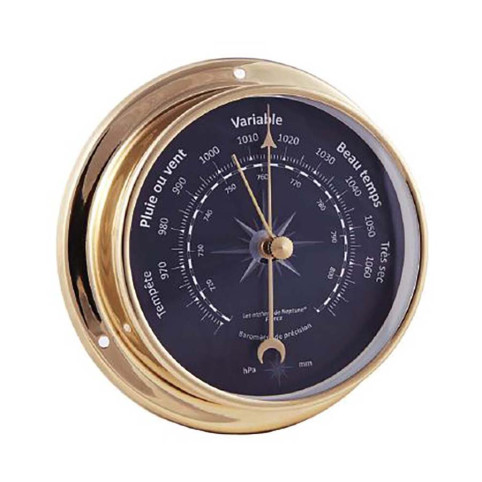
This elegant IMEX Marine barometer analyses pressure variations allowing it to predict the weather. Made of brass. Made in Spain. Guaranteed 1 year. 14.5x4x14.5 cm.
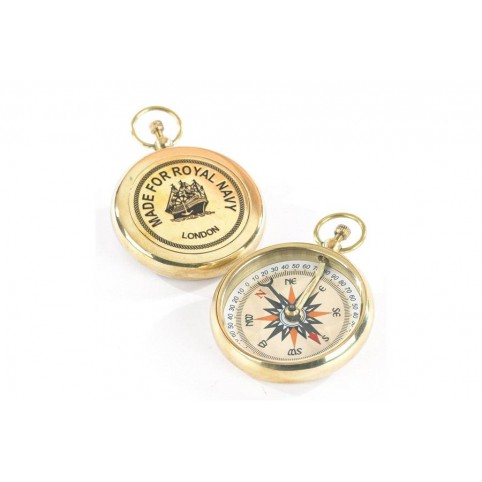
Brass pocket compass with lovely compass rose.
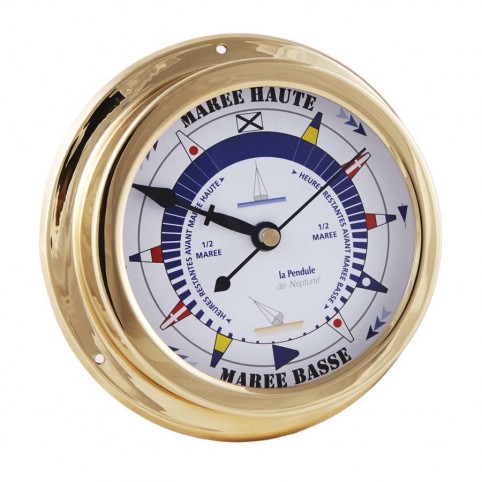
IMEX Marine high precision tide indicator. An indispensable instrument to know the level of the tides throughout the year and to be able to enjoy the sea or the beach at high or low tide hours. Once you receive the instrument, adjust it to the tide times of the place where you are during the full moon. The tide indicator only needs to be adjusted once at...
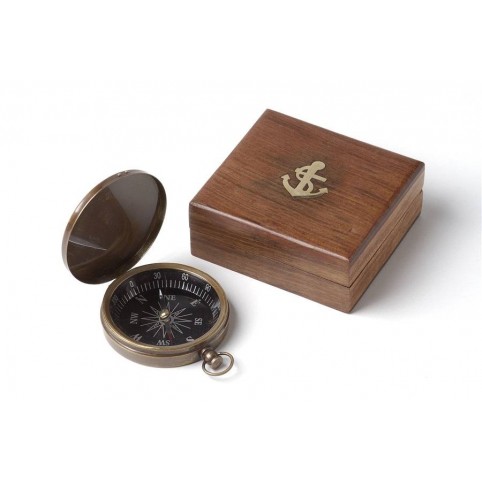
Decorative compass in antique brass finish. It includes a sheesham wood box decorated with an anchor in brass.
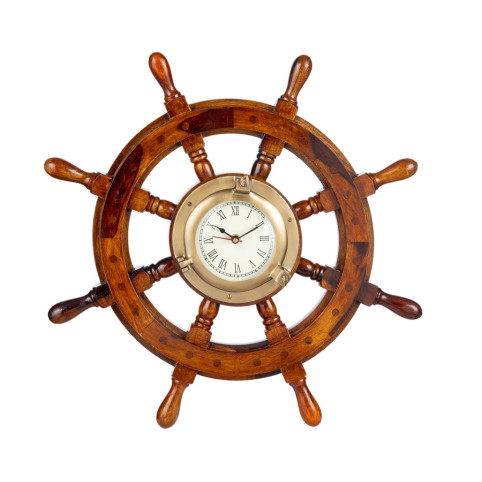
Decoration 8-spoke ship's wheel with clock. Rosewood with 3-hand clock in brass.
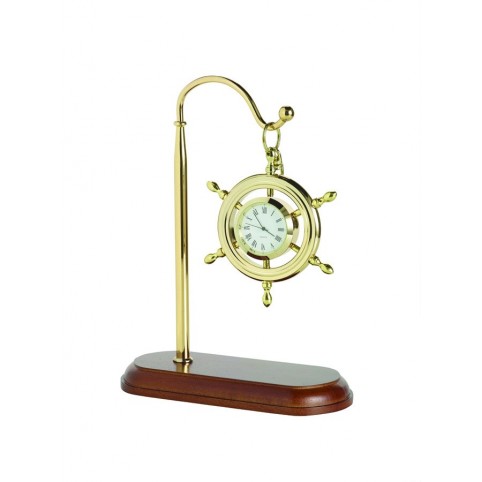
SHIP WHEEL CLOCK. Elegant ship wheel clock for the office in brass suspended on a wooden base. Elegant nautical object.