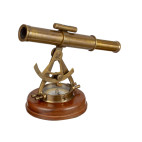
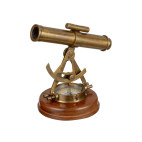
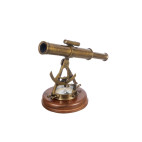
Reproduction of an aged brass theodolite with an acacia wood platform on the axis of which is a compass.
The theodolite, invented in 1571 by the Englishman Thomas Digges, was a measuring instrument used to obtain vertical and horizontal angles in order to determine a direction.
Reproduction of an aged brass theodolite with an acacia wood platform on the axis of which is a compass.
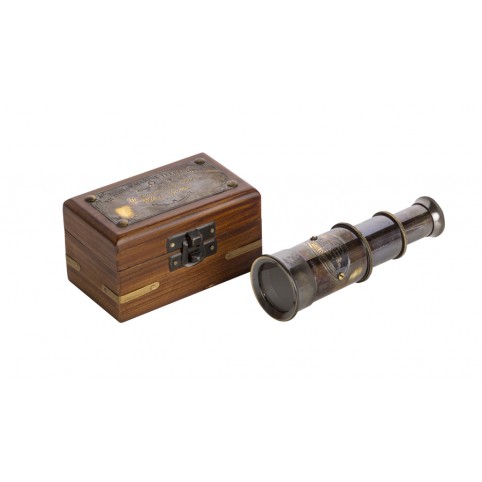
The telescope appeared between the 16th and 17th centuries in the Netherlands. Its development is credited to Hans Lippershey and in its early stages was mainly used by sailors and naturalists.Reproduction telescope in antiqued brass. Comes with an acacia wood box with brass inlays and plaque.
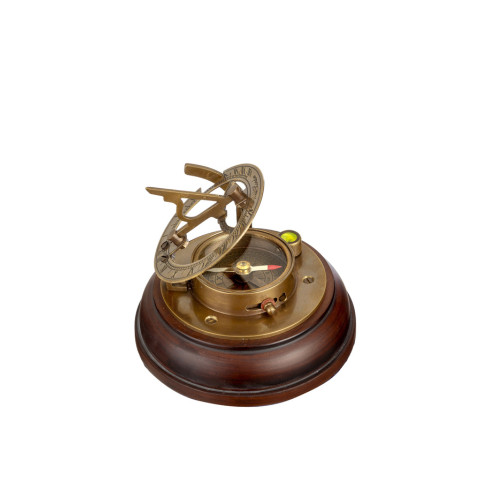
Sundial-compass in old brass on a cylindrical base made of acacia wood.
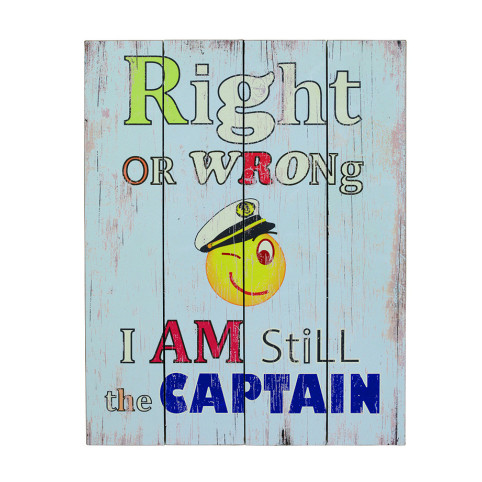
Rustic style marine picture RIGHT OR WRONG I AM STILL THE CAPTAIN. Original plaque made with MDF with a fun nautical emoticon.
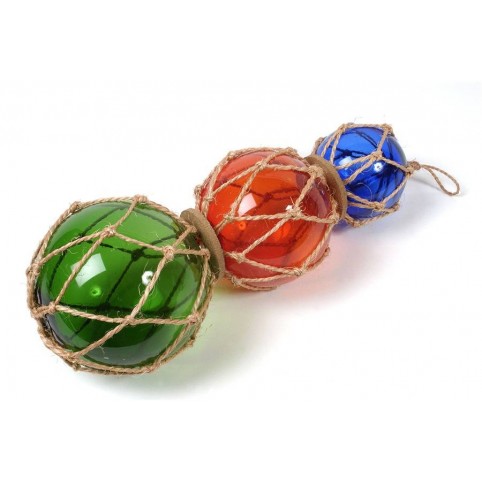
Three-piece fishing float in blue, red and green. Glass balls in braided hemp net. Until the 1950s fishermen attached these to their nets to keep them afloat while they drifted with the current. Lends a decorative marine touch.
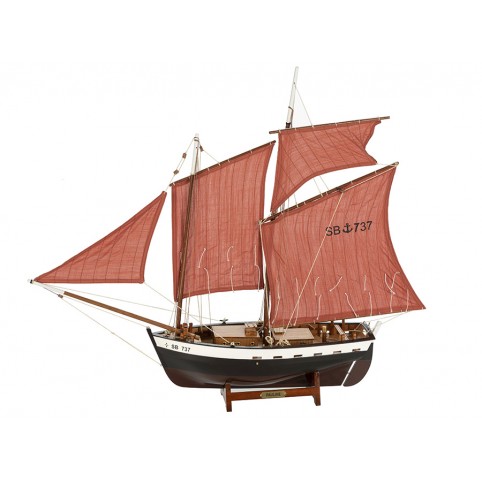
The Pauline (1901) was launched by the Kerity-Paimpol shipyard in Brittany. This little Dahouet 8.60 m by 3.60 m boat was used for drag and coastal fishing and as a pilot boat until her disappearance. She was saved thanks to the "Une chaloupe por Dahouet" Association. Decorative model boat in wood, painted and fully assembled by hand.
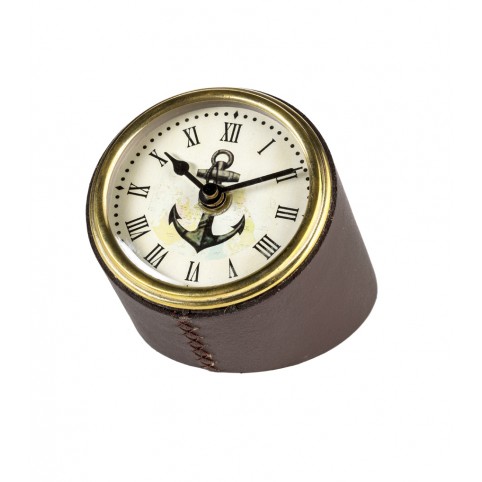
Clock made of varnished brass on a wooden base. Very nautical with the anchor that decorates the dial of this precious watch. Give your office a nautical touch!
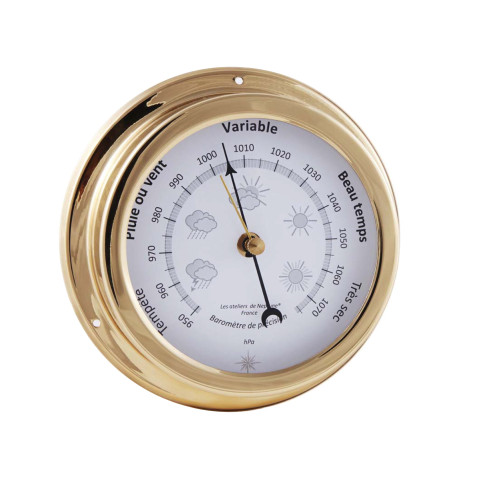
This elegant IMEX Marine barometer analyses pressure variations allowing it to predict the weather. Made of brass. Made in Spain. Guaranteed 1 year. 14.5x4x14.5 cm.
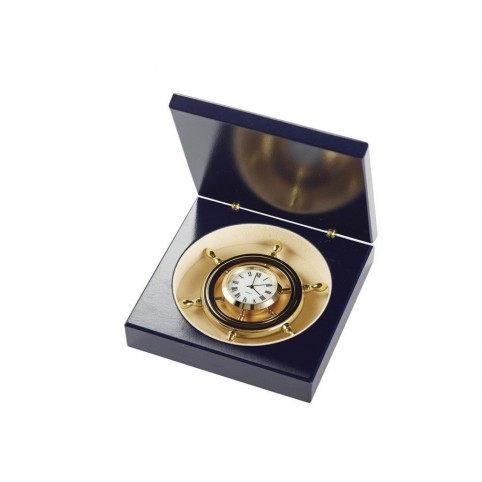
SHIP WHEEL CLOCK. Brass ship wheel clock presented in a beautiful wooden box. Can also be used as a paperweight.
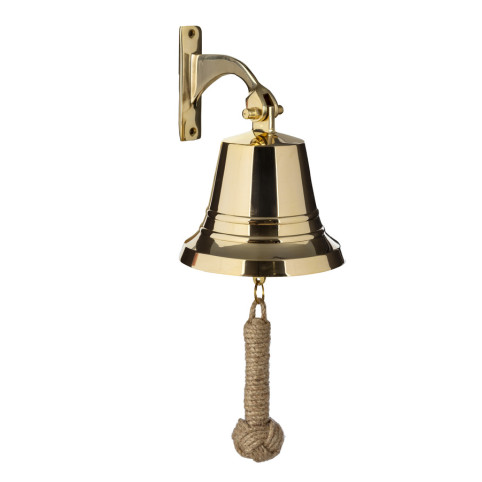
Lovely ship's bell in brass with hemp lanyard. In the past this essential instrument was used to organise life on board by regulating the duty watches. It was also used as an alarm bell in thick fog and to mark celebrations.
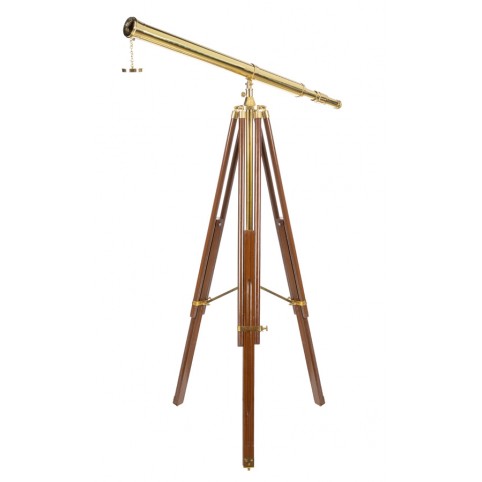
TELESCOPE WITH TREPIED. Made of brass and acacia wood.
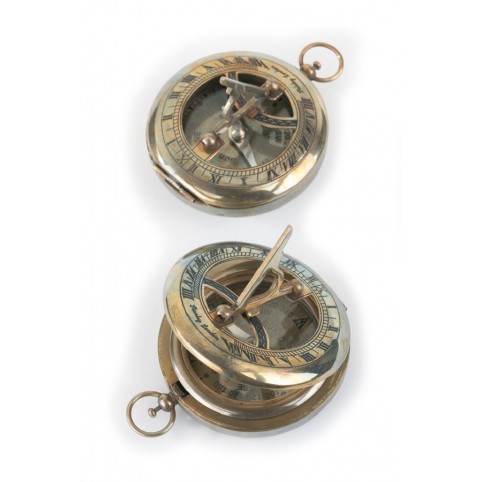
Reproduction of a compass-sundial in brass of the type that Christopher Columbus would have used.
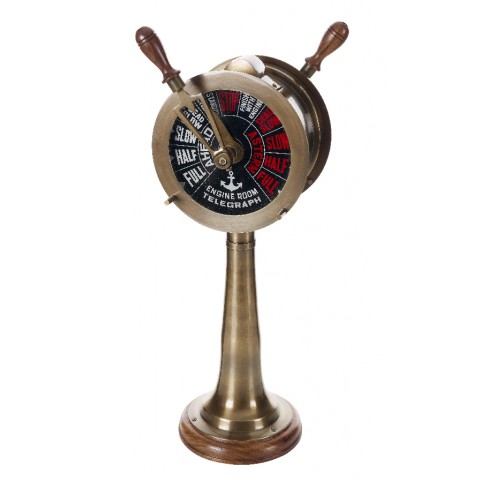
The naval Telegraph enabled crew members to communicate quickly between themselves by means of a rapid succession of signals for each letter of the alphabet and for separating words.Antiqued brass Telegraph. A great gift for lovers of the sea